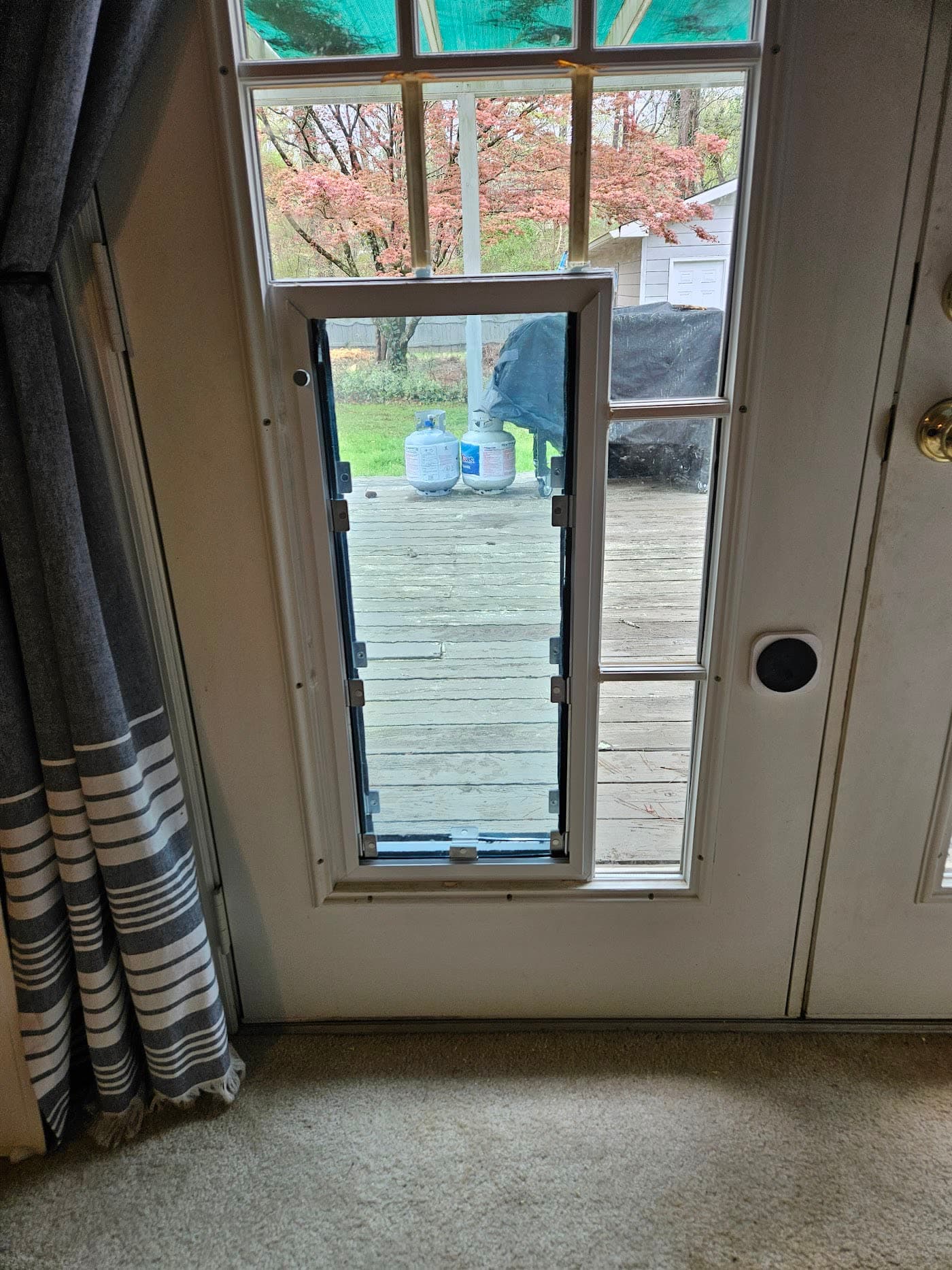
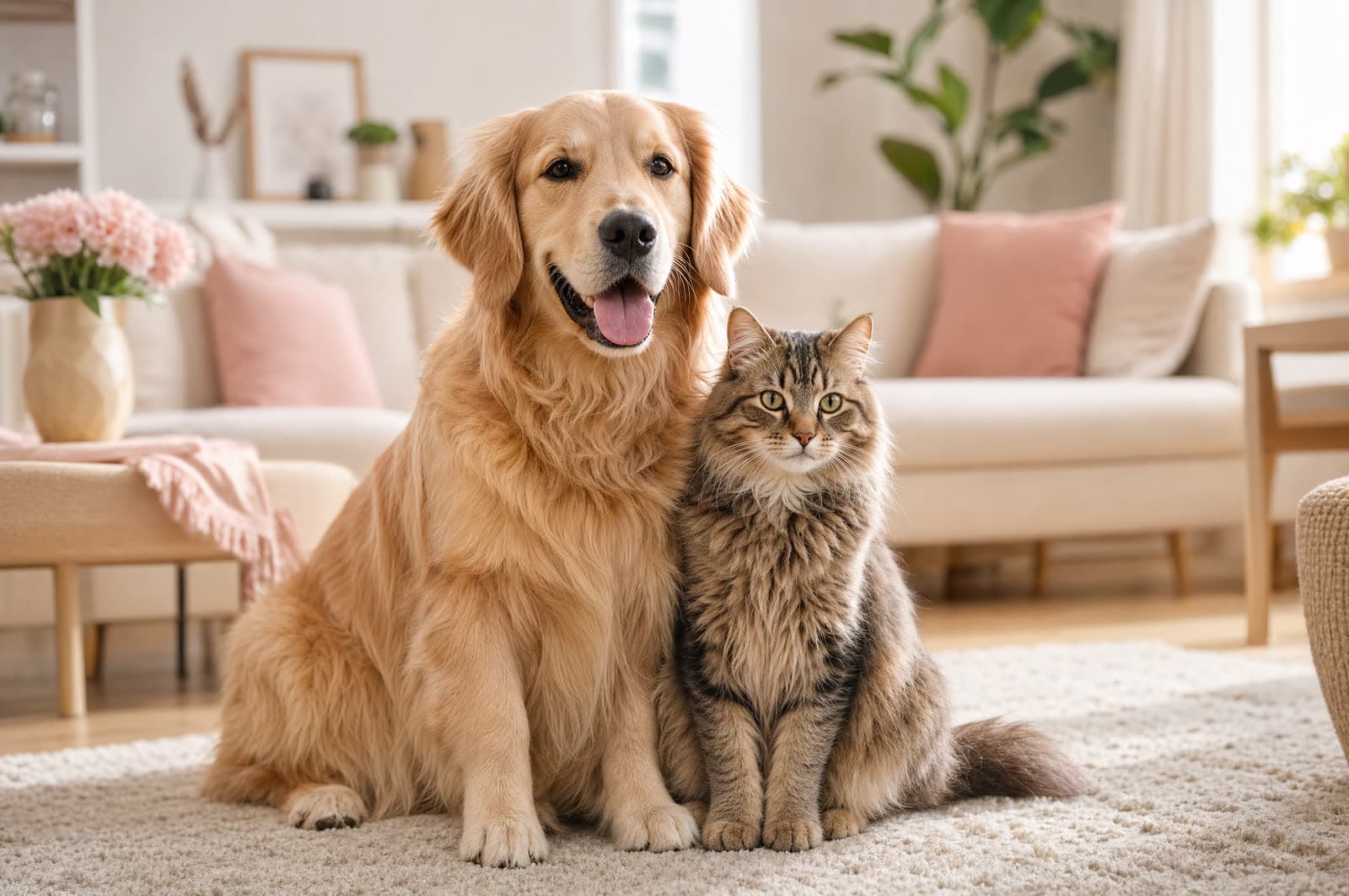
A common question we get: "I've got a big dog and a little cat — do I need two different pet doors?" Almost never. In most multi-pet homes, a single, well-chosen door works for everyone. The trick is knowing how to size it so the biggest pet fits comfortably and the smallest still uses it happily. Here's how we think about it.
The golden rule: size to your largest pet
This is the foundation. Measure your biggest pet — width at the shoulders or hips, height, and step-over — and size the door to fit them comfortably. If the largest pet can walk through without ducking or squeezing, the smaller ones will have no trouble at all.
If you're not sure how to take those measurements, our guide on how to measure your pet walks through all three.
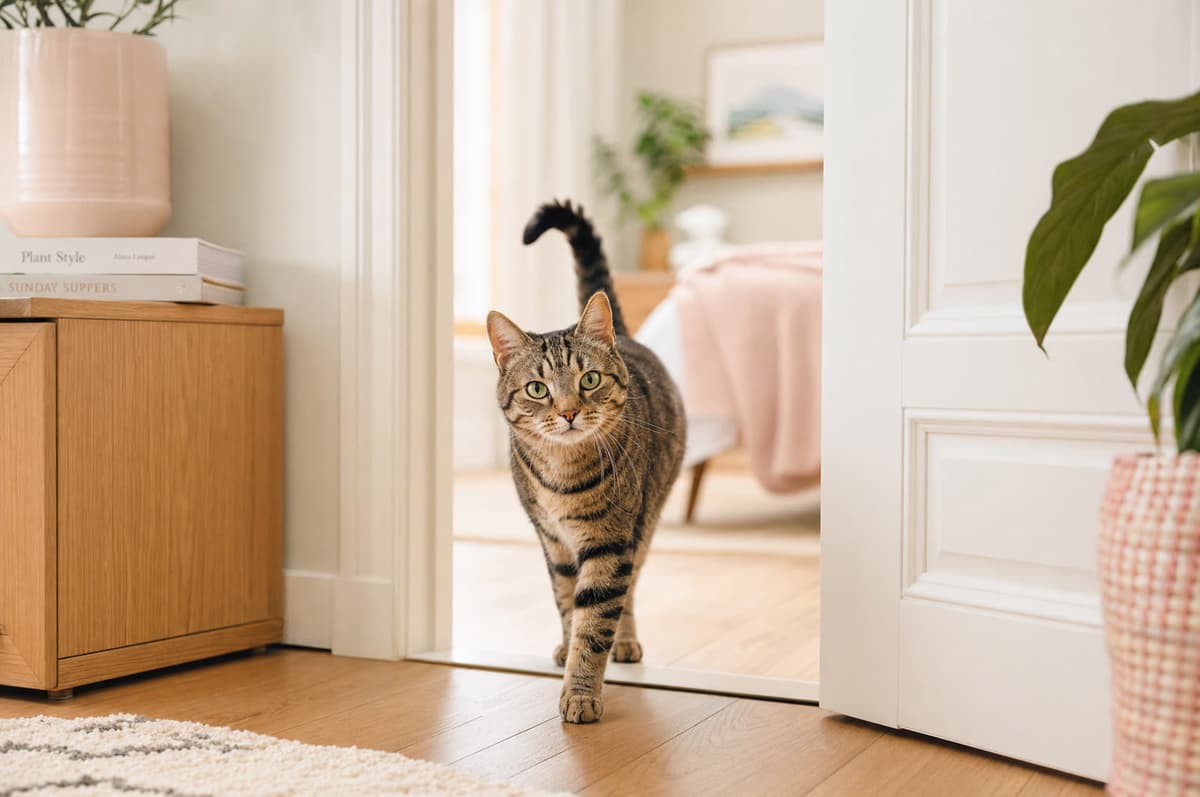
But don't forget the smallest pet
Sizing to the largest pet handles the opening, but there's one detail that trips people up with a big size gap: the flap weight and the step-over height.
- Flap weight: a heavy, stiff flap sized for a Great Dane can be tough for a small cat to push. Quality doors use a well-balanced flap that a small pet can still nudge open easily — but it's worth flagging your smallest pet so we pick the right one.
- Step-over height: the bottom of the flap is set low enough that your shortest-legged pet can step through comfortably, not just your tallest one.
Get those two right and a single door genuinely serves a 5-lb cat and an 80-lb dog alike.
When two doors (or a smart door) make sense
There are a few situations where we might suggest something different:
- A truly enormous size gap — say a giant breed plus a tiny kitten — occasionally works better with a mid-size door if the giant breed doesn't need full access to that spot.
- You want to control who goes where. If you'd like only some pets to have access (keeping the dog out of the cat's area, or vice versa), an electronic/microchip door gives each pet selective entry. We explain that in how microchip pet doors work.
But for the classic "big dog + small cat, both go outside" setup, one properly sized door is the simple, elegant answer.
Training more than one pet
The good news: pets often learn from each other. Once one figures out the door, the others usually follow by watching. Train them one at a time with treats and patience, and don't be surprised if the second pet picks it up faster than the first. Our training guides for dogs and cats apply to multi-pet homes too.
Let us help you get it right
The size gap between your pets is exactly the kind of detail we sort out during a free in-home visit — we measure each pet, pick a door and flap that suits the biggest and the smallest, and set the height so everyone's comfortable.
Have a full house of pets? Get a free quote and we'll find the one door that works for all of them. We serve families across Georgia, and every installation is backed by a lifetime frame warranty.