
When people start shopping for a pet door, they quickly hit a fork in the road: a manual flap door, or an electronic one that only opens for your pet. Both are great options — but they solve slightly different problems. Here's an honest breakdown to help you decide.
How a manual pet door works
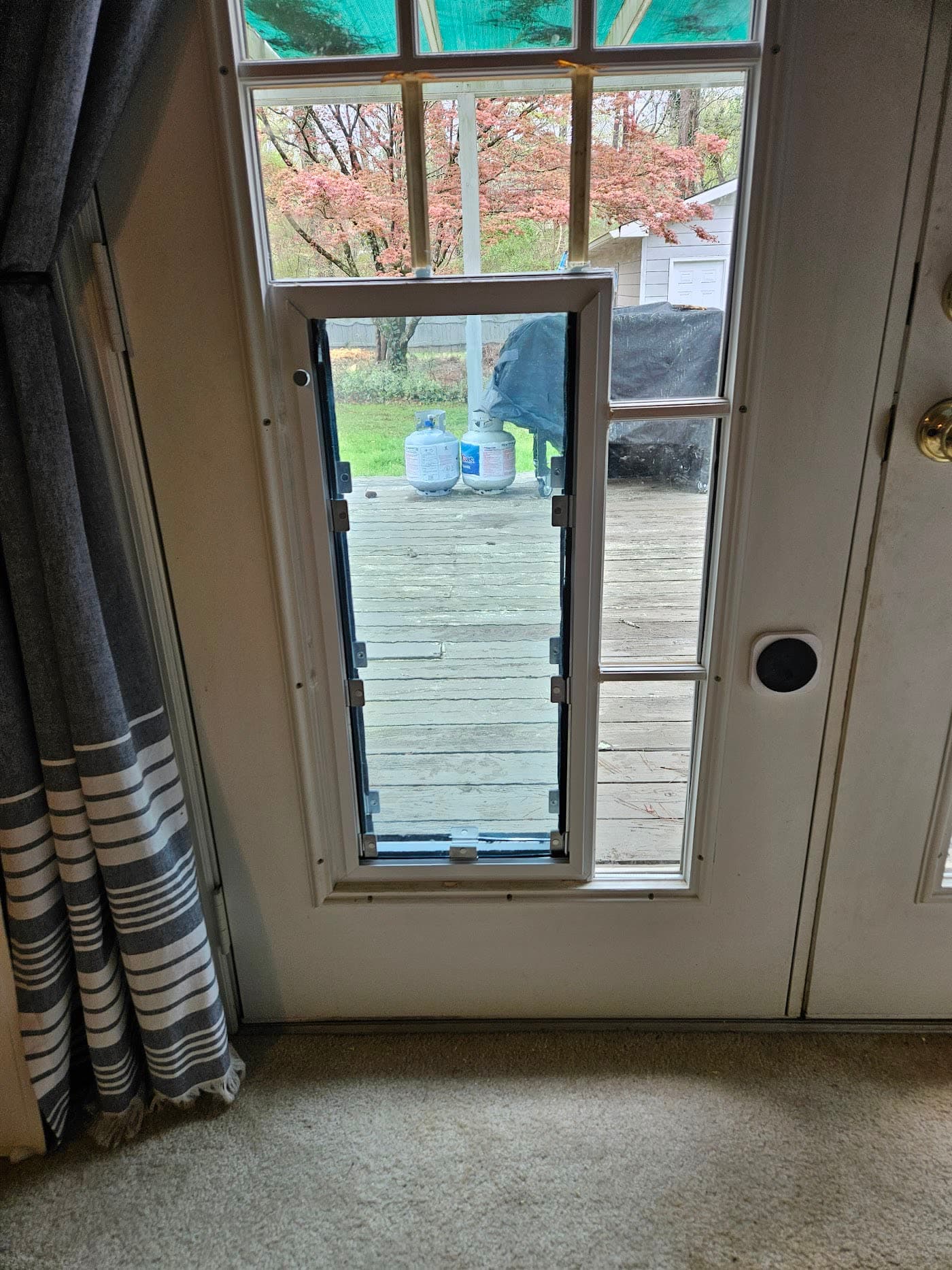
A manual pet door is the classic setup: a weighted, insulated flap your pet pushes through, with a rigid locking panel you slide in whenever you want the opening sealed. Simple, reliable, and nothing to charge or program.
It's a great fit when:
- You want the most straightforward, low-maintenance option.
- Your pets are the only animals likely to use it.
- You value simplicity and a lower up-front cost.
The vast majority of homes do beautifully with a quality manual door — especially when it's sized and sealed properly.
How an electronic pet door works
An electronic (or "selective entry") door stays locked until it detects your specific pet — usually via their existing microchip or a small tag on their collar. Your dog or cat walks up, the door unlocks and lets them through, then locks again behind them.
It shines when:
- Strays or wildlife are a concern — raccoons, opossums, or the neighbor's cat won't get in.
- You have a multi-pet home and want only certain pets to have access.
- You want extra peace of mind about what can come through the opening.
Electronic doors cost more and need a power source (and occasionally a battery change or reprogramming), but for the right situation, that selective entry is genuinely worth it.
The honest trade-offs
| Manual | Electronic | |
|---|---|---|
| Simplicity | ✅ Very simple | A bit more setup |
| Keeps strays/wildlife out | Locking panel only | ✅ Selective entry |
| Multi-pet control | No | ✅ Yes |
| Cost | Lower | Higher |
| Power needed | None | Yes |
Neither is "better" across the board — it comes down to your pets, your neighborhood, and your priorities.
Which should you choose?
Here's the simple way we think about it with customers:
- If it's just your pet and you want clean, reliable, low-fuss access → manual is usually the sweet spot.
- If you're worried about wildlife getting in, or you want to give only some of your pets access → electronic earns its keep.
And remember, whichever you choose, the installation quality matters just as much as the door — a perfectly-selected electronic door installed with a poor seal still leaks air. That's true for any pet door type we install.
Not sure? That's what the free visit is for
The easiest way to decide is to talk it through with someone who installs both every week. During your free in-home assessment, we'll look at your pets, your home, and your concerns, and give you a straight recommendation — no upsell.
Want help choosing? Get a free quote and we'll point you to the right door for your situation. We serve families across Georgia, and every installation is backed by a lifetime frame warranty.