A pet door that works beautifully for a beagle can be all wrong for a Labrador, a shepherd, or a Great Dane. Big dogs put real demands on a pet door — and getting it right is about a lot more than just "buy the biggest flap you can find." Here's what actually matters when you're choosing a door for a large breed.
It starts with three measurements — not guesswork
For any dog, the right size comes down to width, height, and step-over (belly height off the floor). For large breeds those numbers get big, and small errors get magnified — a flap that's an inch too short has a 90-pound dog ducking and shouldering through every single time.
We always recommend taking a quick set of measurements yourself so you understand the fit (here's how to measure your dog), and then we re-measure precisely during your free in-home visit. With big dogs especially, "close enough" isn't good enough.
Flap size: room to walk through, not squeeze
The flap opening needs to be tall and wide enough for your dog to walk through at a natural stride — head up, no crouching. A door your dog has to duck or twist through won't get used, and it's uncomfortable for their joints over time.
For the biggest breeds, this often means a large or extra-large door, which is exactly why the frame matters so much (next).
Frame strength matters more for big dogs
Here's what separates a door that lasts from one that sags: a large-breed dog leans on, pushes through, and occasionally bumps the door dozens of times a day. A flimsy frame flexes, seals poorly, and wears out fast.
The premium, American-made doors we install use heavy-duty aluminum frames built to take that daily use without warping — and they're backed by a lifetime frame warranty. For a big dog, that structural durability isn't a luxury; it's the difference between a door that still seals crisply in five years and one that doesn't.
Step-over height: kind to hips and joints
Large and giant breeds are also the dogs most prone to hip and joint issues as they age. That makes the step-over height — how high they have to lift a paw to step through — genuinely important. Set it too high and an older large dog will start avoiding the door.
We position the flap so your dog steps through comfortably now and as they get older. It's a small detail that makes a big difference for a big dog's whole life.
Where it goes: door, wall, or glass
Big doors need solid mounting. Depending on your home, a large-breed pet door goes into:
- A solid exterior door — the classic, clean fit. (See pet doors for doors.)
- A wall — great when there's no ideal door, and often the sturdiest option for an extra-large opening.
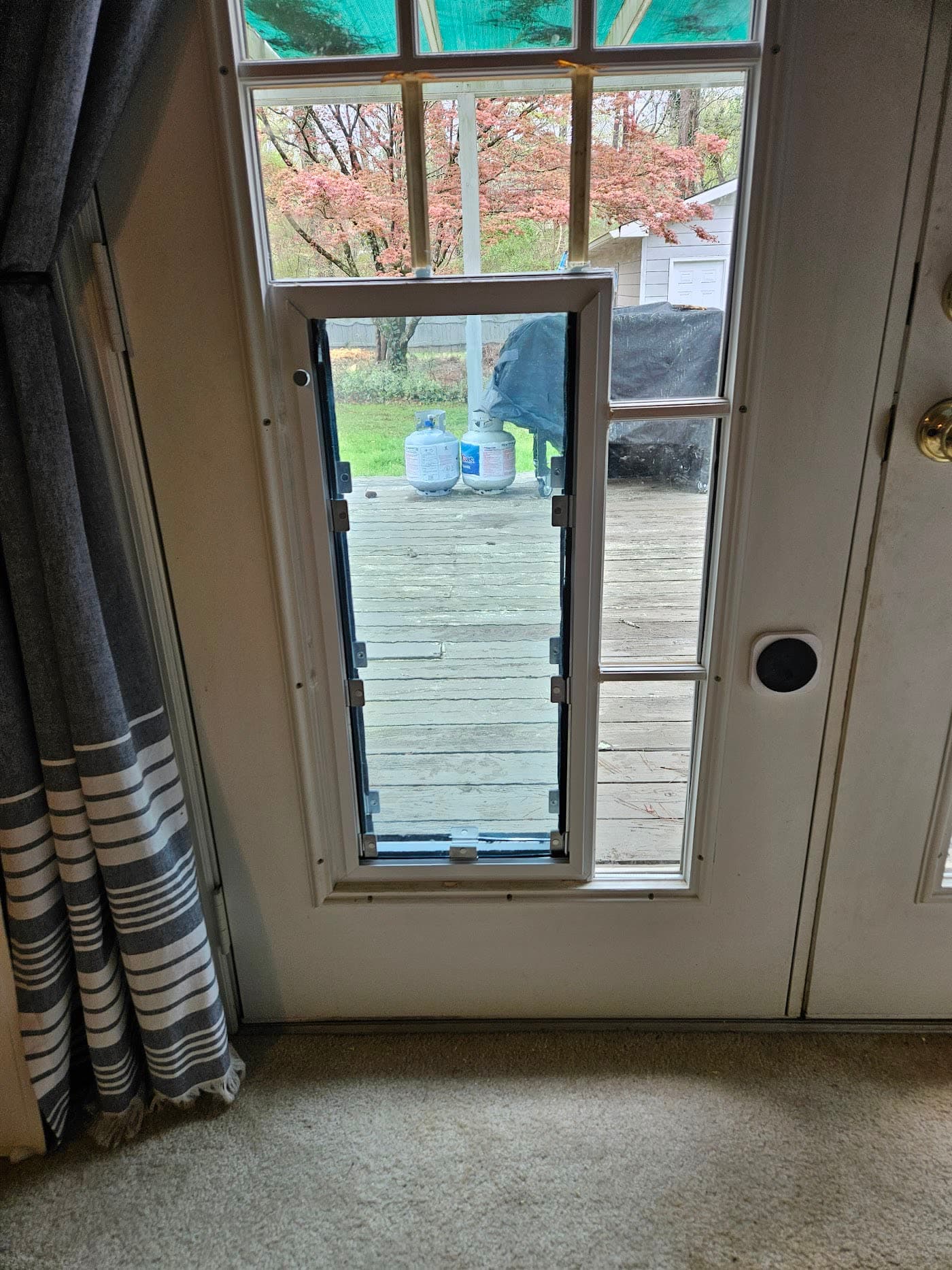
- Glass — done without cutting the tempered glass.
Part of our job is recommending the placement that gives a large door the strongest, best-sealed home.
Don't forget security
A bigger opening naturally raises the "could someone get through this?" question. Every door we install includes a rigid locking panel to seal the opening completely whenever you want, and thoughtful placement keeps it away from locks and out of easy view. Bigger doesn't have to mean less secure — it just means planning for it.
The bottom line
The best pet door for a large dog is one that's sized precisely, framed to last, set at a comfortable step-over, and mounted in the right spot — not simply the widest flap on the shelf. Get those right and your big dog gets years of easy, comfortable freedom.
Have a large or giant breed? Let's make sure they get a door that fits them perfectly and holds up to their size. Get a free quote — we serve families across Georgia, and every install is backed by a lifetime frame warranty.